A new study published in the Pakistan Veterinary Journal highlights the protective role of curcumol, a natural compound derived from Curcuma, against intestinal damage caused by encephalomyocarditis virus (EMCV) in mice.
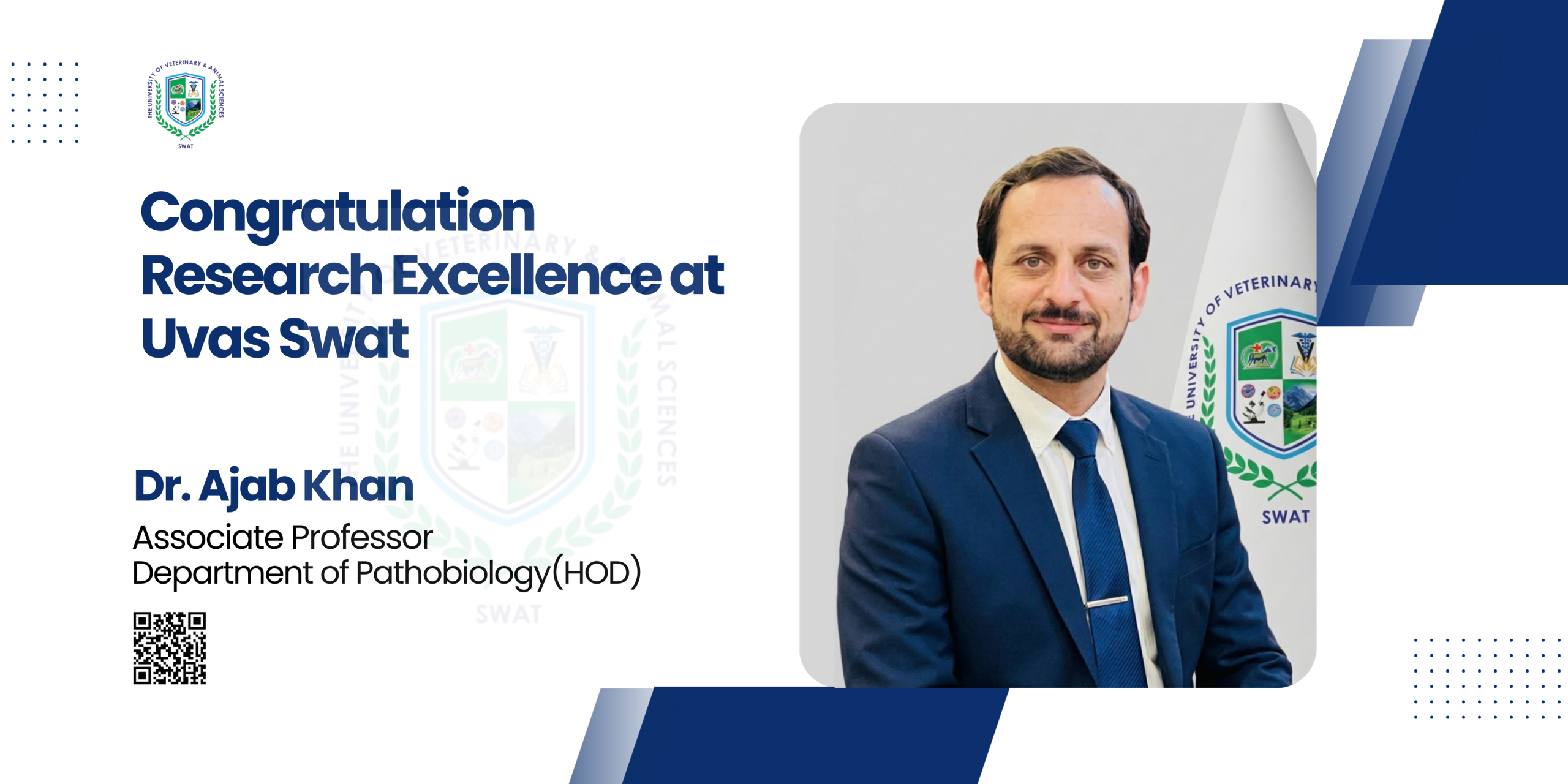
Researchers from Shanxi Agricultural University, in collaboration with Ajab Khan from the University of Veterinary and Animal Sciences, Swat, demonstrated that curcumol significantly reduced EMCV replication and improved intestinal health.
Key findings include:
- Enhanced intestinal barrier integrity: Curcumol upregulated tight junction proteins (ZO-1 and Occludin), helping restore mucosal protection.
- Improved gut microbiota balance: It increased beneficial bacteria such as Corynebacterium mastitidis and Mucispirillum schaedleri.
- Boosted immune response: Curcumol elevated interferon-beta (IFN-ß) levels and activated the DHX15-NLRP6-IRF3 signaling pathway, strengthening antiviral defense.
- Histopathological recovery: High-dose curcumol treatment showed near-normal intestinal villi and reduced epithelial damage compared to untreated virus-infected mice.
To Cite This Article: Zhou W, Haseeb A, Zheng K, Sun N, Zhong J, Yang H, Fan K, Yin W, Sun Y, Khan A, Li H and Sun P, 2026. Curcumol inhibits EMCV-induced intestinal injury in mice by modulating the DHX15-Nlrp6-IRF3- IFN-β signaling pathway. Pak Vet J, 46(7): 1732-1742. http://dx.doi.org/10.29261/pakvetj/2026.166
This research provides new insights into the therapeutic potential of curcumol as a natural antiviral agent, offering hope for future strategies to combat EMCV-related intestinal injury and possibly other viral infections